Sunday, May 6, 2012

The Complete Guide to Managing Your Parents' Finances When They Cannot: A Step-by-Step Plan to Protect Their Assets, Limit Taxes, and Ensure Their Wishes Are Fulfilled

The Complete Guide to Managing Your Parents' Finances When They Cannot: A Step-by-Step Plan to Protect Their Assets, Limit Taxes, and Ensure Their Wishes Are Fulfilled Review


Every year, millions of Americans transfer their finances to their children or other family members because they reach a point at which they can no longer manage them alone. More than million in 2006 alone was lost due to confusion in transferring these finances and the elderly are the ones who end up suffering. For those who are about to start managing the finances of their parents, it is important to know exactly how to protect their assets, manage their taxes, and live up to their wishes. This book has been written to do just that, providing a comprehensive walkthrough of what you can expect and how to successfully handle your parents finances. To start, you must learn the basics of managing money that is not your own. You will be provided with a step-by-step chapter on how to keep track of funds, maintain the same accounting methods your parents have used for decades, and keep everything organized and separate from your own. You will learn how to evaluate sources of income including how to receive and manage Social Security, 401(k), and other retirement plans as payments are made. Additionally, you will learn how to balance their expenses, including a budgeting sheet to help you maintain the same level of expense they expect. You will learn how to budget accordingly, depending on where your parents are living and what their medical expenses might be. A chapter on insurance and medical coverage is included to help you understand how much money you can expect to set aside for these expenses and how much should be covered by programs such as Medicaid. Learn how to maintain housing for your parents as well, whether they are in assisted living or staying with you. A guide on how to talk to your parents about fraud and keep them away from potentially dangerous opportunities will make it easier for you to keep a handle on their finances without taking away their freedom. Dozens of men and women who have gone through this same situation, and also professional finance managers, have added their expertise to this book, providing firsthand accounts of how they were able to manage their own parents accounts and what you can expect. You will learn the difference in tax laws for the retired and what you will be required and not required to pay as a result of their age. It can be daunting when you first take control of your parents finances, but with this book in your hands, you should be able to quickly and efficiently take the reins and maintain the quality of life they have grown accustomed to.


Thursday, May 3, 2012

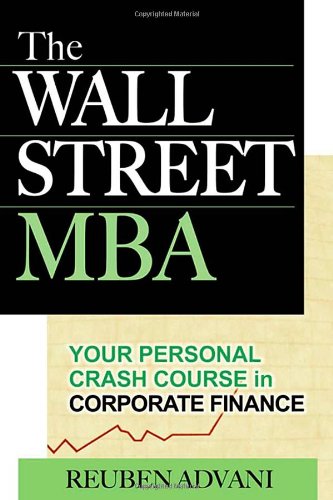
The Wall Street MBA: Your Personal Crash Course in Corporate Finance

The Wall Street MBA: Your Personal Crash Course in Corporate Finance Review


A streetwise MBA that offers you a degree in success

Whether you're a novice or an experienced professional, The Wall Street MBA explains the underpinnings of financial valuation, financial analysis, and corporate accounting and describes how each drives corporate America and Wall Street.

Peppered with true stories and amusing anecdotes, this concise, easy-to-read, interactive resource teaches MBA concepts by applying theory to real-life examples. You'll learn how to review financial statements, analyze earnings, detect fraud, assess stock prices, value companies, and structure mergers and acquisitions, among other exercises.


Sunday, April 29, 2012

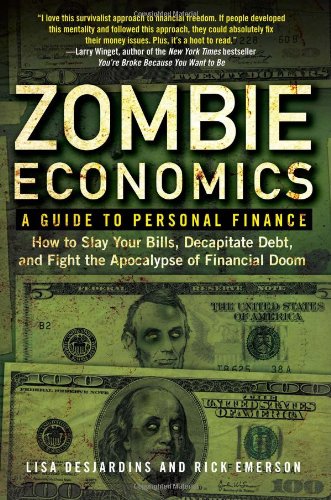
Zombie Economics: A Guide to Personal Finance

Zombie Economics: A Guide to Personal Finance Review


If financial guides leave you perplexed (or comatose), you should read Zombie Economics instead. It's compelling, it's straightforward, and it can change your life.

Zombie Economics is for anyone in the midst of financial uncertainty, a place where carelessness and timidity will cost you. From the creeping spread of unpaid bills to the lumbering advance of creditors, Zombie Economics confronts the biggest threats to your personal economy, takes aim, and then takes them down. Specific chapters include:

A Basement Full of Ammo: Saving yourself by saving money

They'll Eat the Fat Ones First: Using fitness as a financial asset

Shooting Dad in the Head: Ending your relationships with the financially infected

With simple, easy-to-use techniques for identifying-and eliminating-your financial weak spots, Zombie Economics turns victims into survivors.

Watch a Video


Saturday, April 28, 2012

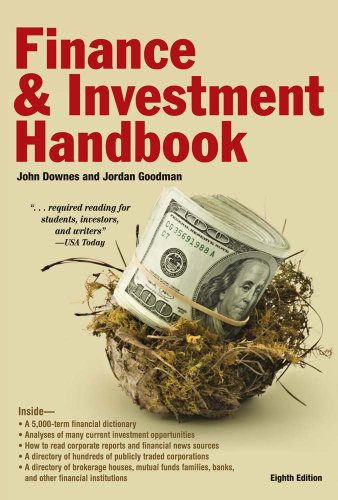
Barron's Finance and Investment Handbook (Barron's Finance & Investment Handbook)

Barron's Finance and Investment Handbook (Barron's Finance & Investment Handbook) Review


Updated to reflect the current investment climate, this large reference volume presents a financial dictionary with definitions of more than 5,000 terms, an analysis of many current investment opportunities, guidelines for non-experts on what to look for when reading corporate reports and financial news sources, an up-to-date directory of hundreds of publicly traded corporations in the United States and Canada, and a directory listing the names and addresses of brokerage houses, mutual funds families, banks, federal and state regulators, and other major financial institutions. A previous edition of this fact-filled reference book was called "required reading for students, investors, and writers" by USA Today. The brand-new eighth edition is bigger and better than ever.


Friday, April 27, 2012

Personal Finance For Dummies®, Mini Edition

Personal Finance For Dummies®, Mini Edition Review


The easy way to achieve your financial goals!

Get expert guidance on how to track expenditures, reduce spending, get out of debt, invest wisely, save for college and other events, and how to survive the unexpected! In no time at all, you will gain valuable financial know-how and find out how to start investing!

Find out:

  • Ways to weigh expected investment returns and risks
  • How to determine your investment goals
  • Advice on how to plan for the future
  • The best ways to reduce and eliminate debt
  • How to change credit card habits


Thursday, April 26, 2012

Personal Finance (Mcgraw-Hill/Irwin Series in Finance, Insurance and Real Estate)

Personal Finance (Mcgraw-Hill/Irwin Series in Finance, Insurance and Real Estate) Review


Your journey to financial freedom starts here! Kapoor/Dlabay/Hughes’ market-leading Personal Finance provides practical guidance on how students can achieve peace of mind with regard to their financial situation. It provides many financial planning tools using a step-by-step approach to help students identify and evaluate choices as well as understand the consequences of decisions in terms of opportunity costs. Managing money in order to obtain freedom from financial worries – that’s what the 10th edition of Personal Finance is all about!


Thursday, April 19, 2012

Personal Finance: Strategic Default; Is It Just a Business Decision?

Personal Finance: Strategic Default; Is It Just a Business Decision? Review


On February 19, 2009, CNBC commentator Rick Santelli expressed his
famous rant. This rant essentially expressed the feelings of those who
pay their bills, pay their house notes, and stay out of debt. This book
discusses Strategic Default, walking away from a mortgage note, in the
light of this Tea Party understanding.

With the formation of the Tea
Party, admittedly because of the Santelli rant, a movement to return
America to her roots of personal responsibility was born. Santelli had
said that those who made a bet on the housing ponzi and lost should not
be bailed out. Many took his rant to mean that the "losers" should man
up and pay off their mortgages.

This book does not make a case for
whether the mortgage deadbeats should be bailed out by the government.
But there are other issues regarding the actions of those who can
afford to pay their mortgages yet walk away from homes that are worth
far less than the value of the mortgage. This book looks at what many
call a business decision in the light of what is moral, even what is
patriotic.


A person who is concerned about his conscience, about doing
the right thing, needs a discussion regarding the ethics of walking
away. This book will help you to weigh your options from a moral point
of view.